About this service
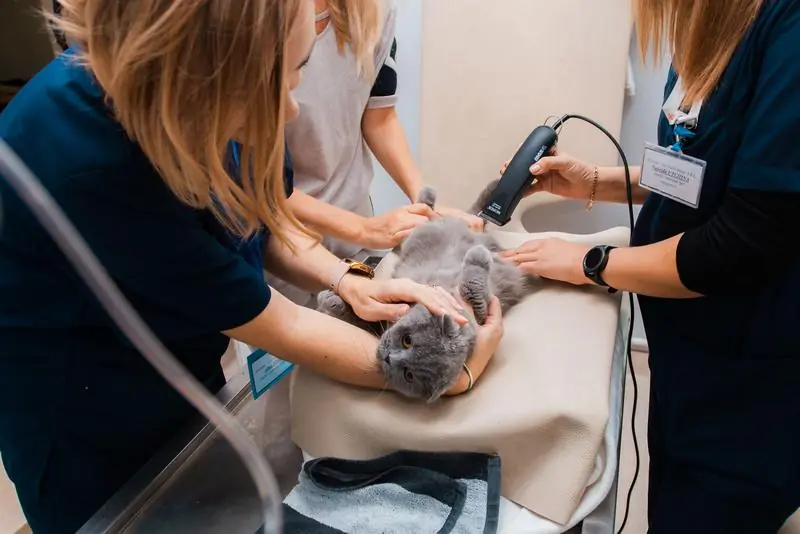
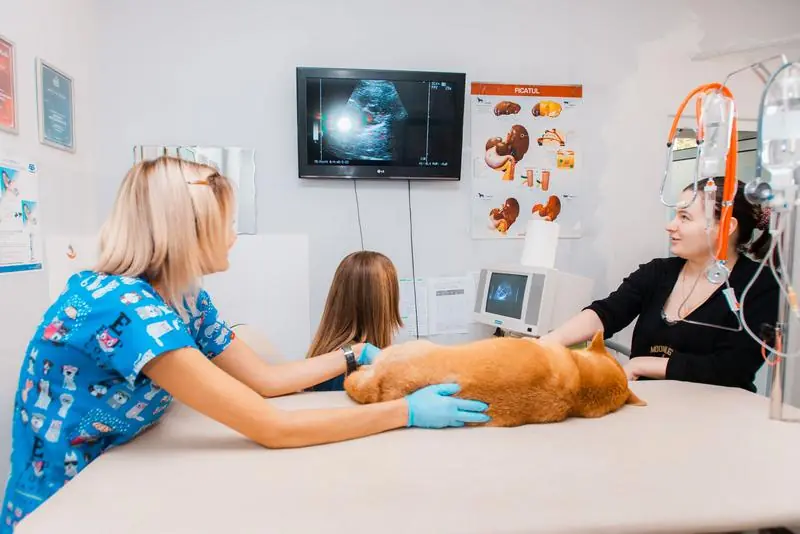
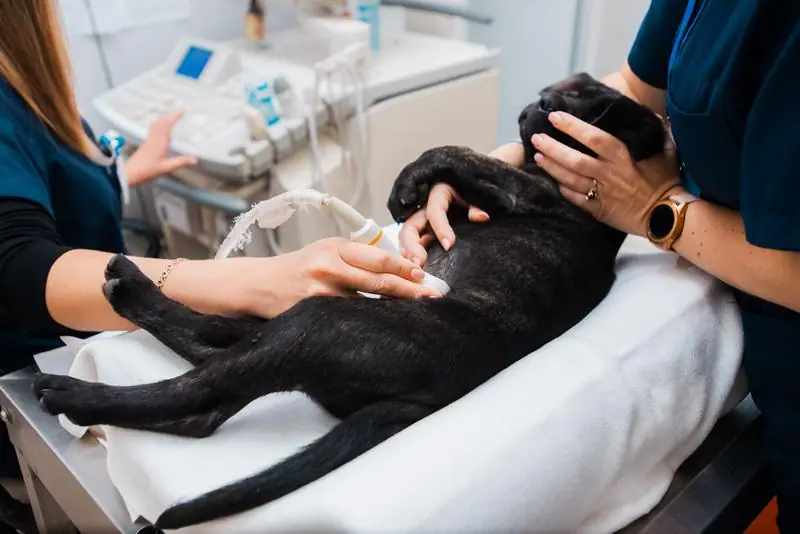
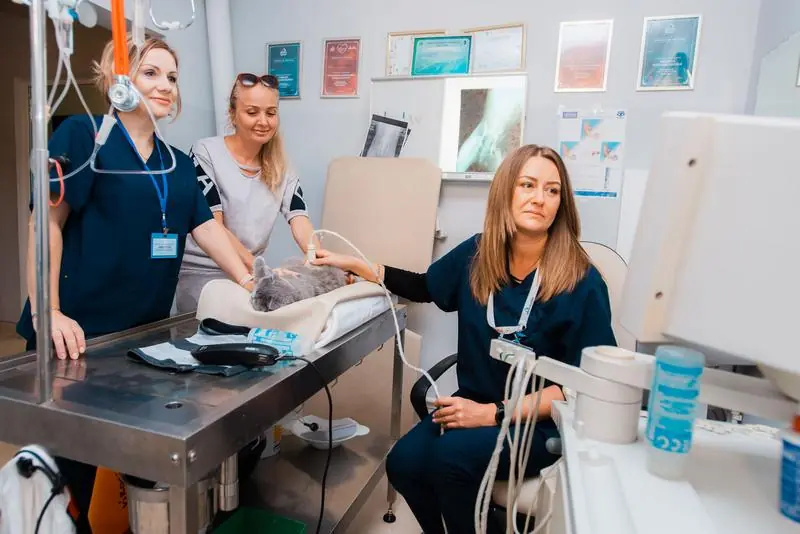
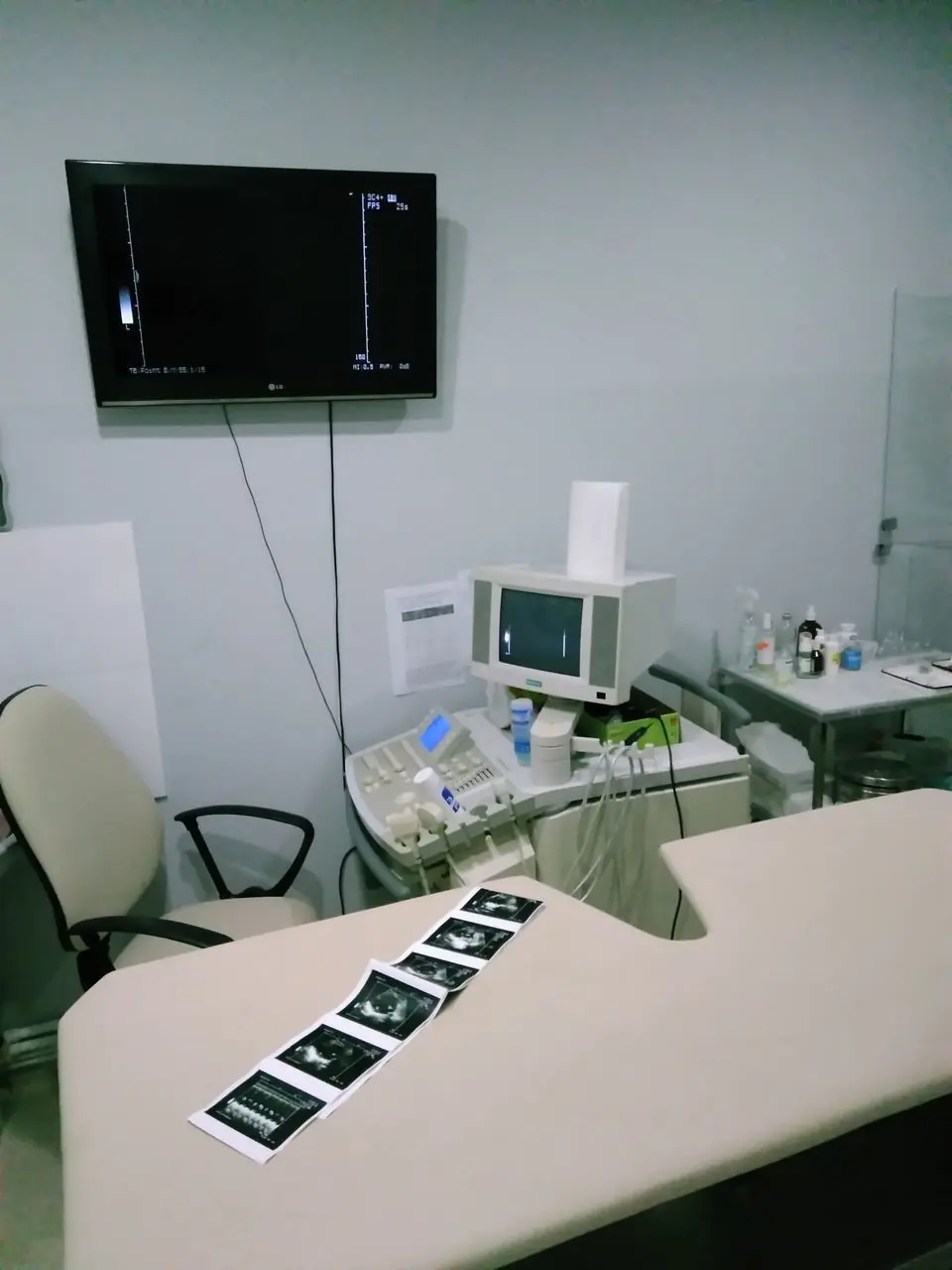
Ultrasound is non-invasive and painless: your pet lies on a soft mat while the vet examines the organs with a probe and a special gel. There is no radiation.
Colour Doppler shows the direction and speed of blood flow in the heart and vessels. It is essential for diagnosing heart disease, tumours and vascular problems.
What it includes
Examinations
- Abdominal ultrasound: liver, spleen, kidneys, bladder, intestines
- Reproductive tract ultrasound
- Pregnancy diagnosis and monitoring
- Echocardiography
- Colour Doppler: vessels and blood flow
- Detection of echogenic lesions, cysts and tumours
- Ultrasound-guided sampling (cystocentesis, abdominal tap)
When it is recommended
- Recurring vomiting or diarrhoea
- Enlarged or painful abdomen
- Urinary problems or blood in the urine
- Suspected pregnancy
- Heart murmur
- Abnormal blood test results (liver, kidneys)
How it works
- 1
Preparation
8–12 hours without food; water is fine.
- 2
Full bladder
Do not let your pet urinate just before the exam.
- 3
Examination
We clip a small patch of fur and examine the organs.
- 4
Results
We explain the images right there in the room.
From our clinic
Frequently asked questions
Does the fur need to be clipped?
Usually yes: a small patch on the belly, so the probe touches the skin. The fur grows back within a few weeks.
How long does the exam take?
Usually 15–30 minutes, depending on the area examined.
Is sedation needed?
Rarely. Most animals tolerate ultrasound well, especially with their owner present.